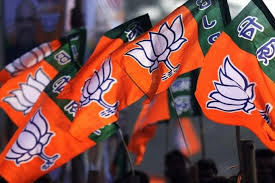
The results of the Thiruvananthapuram Corporation election have seriously challenged long-held political assumptions in Kerala. The Bharatiya Janata Party (BJP) emerging as the largest party in this key urban body is not just a municipal victory, but a clear indication of changing political trends in the state.
Until now, Kerala’s political landscape has largely been dominated by the Left Democratic Front (LDF) and the United Democratic Front (UDF). BJP was often viewed as having a limited footprint in the state. However, its strong performance in Thiruvananthapuram—a city of political, administrative, and symbolic importance—has weakened that perception.
Why Thiruvananthapuram Corporation Matters
Thiruvananthapuram is not only the capital of Kerala but also a key urban center that often sets the tone for state-level politics. Local body election outcomes here are closely watched as indicators of broader political shifts. BJP’s rise as the largest party suggests that a significant section of urban voters is now open to political alternatives.
This result is particularly important because municipal elections are typically driven by local concerns. Issues such as roads, sanitation, traffic management, employment, and urban development played a central role in shaping voter preferences. BJP’s focused campaign on these civic issues and its visible organizational presence appear to have resonated with voters.
Key Factors Behind BJP’s Success
Political analysts point to several reasons behind BJP’s breakthrough performance.
First, the party’s grassroots organization. An active network of workers at the booth level and continuous public outreach helped establish direct communication with urban voters.
Second, emphasis on local governance issues. Rather than relying heavily on national-level narratives, the campaign prioritized city-specific problems, positioning BJP as a credible local alternative.
Third, growing urban dissatisfaction with the Left government. Concerns related to inflation, employment opportunities, and urban administration contributed to a shift in voter sentiment against the LDF.
A Warning Signal for the LDF
For the LDF, the election outcome is widely seen as a moment for introspection. In a state long considered a stronghold of left-wing politics, the decline in urban support signals that traditional vote banks can no longer be taken for granted.
Experts believe that unless the LDF addresses the concerns of the urban middle class and young voters more effectively, political challenges in future elections could intensify.
Prime Minister Modi’s Statement and National Implications
Prime Minister Narendra Modi described the result as an “important turning point” in Kerala’s political journey. His statement goes beyond local celebration and reflects BJP’s broader strategic objective of strengthening its presence in southern India.
Within the party, this victory is being viewed as a foundation for long-term organizational expansion in Kerala. Leadership circles consider it a decisive step toward building a more competitive political base in the state.
What Lies Ahead?
The Thiruvananthapuram Corporation election results indicate that Kerala’s political environment is no longer static. Voters appear willing to experiment and explore alternatives, especially in urban areas.
While it would be premature to conclude that this result will immediately transform state-level power dynamics, its psychological and political impact is undeniable. The outcome is likely to influence voter behavior and party strategies in upcoming Assembly and Lok Sabha elections.
Conclusion
BJP’s historic rise in the Thiruvananthapuram Corporation election marks the beginning of a potential political transition in Kerala. This outcome is not merely about control of a municipal body, but about evolving political awareness, shifting urban expectations, and increasing electoral competition.
Kerala now appears to be at a crossroads, where political success is being shaped less by tradition and more by governance performance and credible alternatives.