


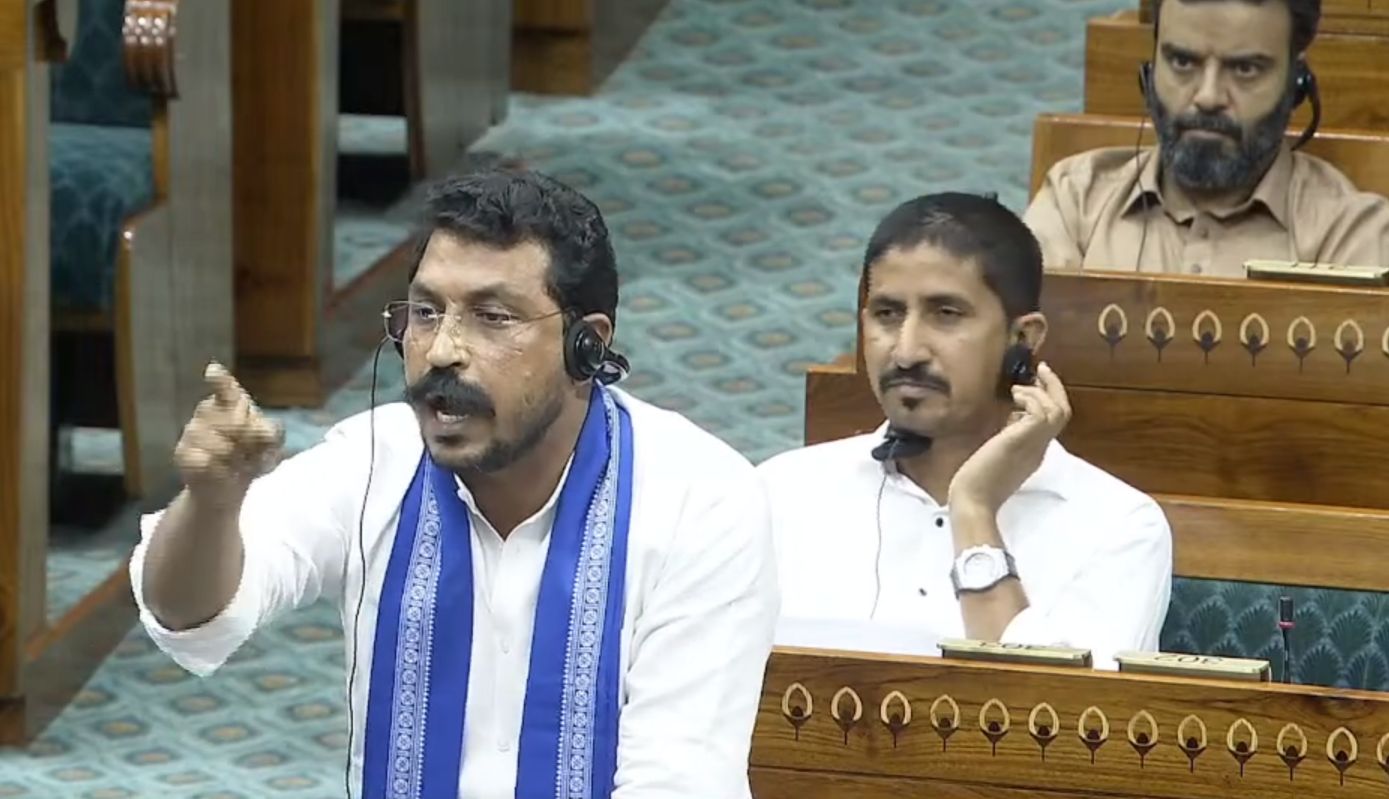
In the corridors of the Indian Parliament, heated debates between the ruling party and the opposition are a common sight. Political accusations and counter-accusations often dominate the discussions. However, sometimes a voice rises in the House that goes beyond routine politics and speaks about the concerns of millions of people who feel ignored by the system.
Recently, Nagina MP and leader of the Azad Samaj Party, Advocate Chandrashekhar Azad, delivered a speech in the Lok Sabha that drew attention to several serious and often overlooked issues. His address not only raised questions before the government but also sparked a broader discussion about whether Parliament is truly functioning as a platform for the voices of the marginalized.
Constitutional Concerns Raised in Parliament
During his speech, Chandrashekhar Azad referred to several constitutional and parliamentary principles. He reminded the House of the ideals of Dr. B. R. Ambedkar, emphasizing the importance of maintaining the dignity and independence of democratic institutions.
Azad specifically cited Article 98 of the Constitution while expressing concern about the increasing bureaucratic influence within the Parliament Secretariat. According to him, excessive external control or interference in an autonomous parliamentary institution could weaken the democratic structure of governance.
Highlighting the Issues of Marginalized Communities
A significant part of Azad’s speech focused on the challenges faced by marginalized communities, including Dalits, backward classes, and tribal groups. Referring to data from the National Crime Records Bureau (NCRB), he pointed out the rising incidents of violence against these communities.
He also raised concerns about the backlog of reserved posts in government departments for Scheduled Castes, Scheduled Tribes, and Other Backward Classes. Azad questioned why these positions remain vacant despite the government’s repeated claims of inclusive development.
According to him, if the vision of development truly includes everyone, then equal opportunities in employment must be ensured for youths from these communities.
Questions on Parliamentary Procedures
Chandrashekhar Azad also highlighted issues related to parliamentary procedures. He argued that tools such as adjournment motions and calling attention notices are not being adequately utilized or allowed for many members of Parliament.
He suggested that when elected representatives are unable to raise pressing issues through proper parliamentary mechanisms, it weakens the spirit of democratic debate and limits the representation of public concerns.
Three Major Questions for the Government
Following Azad’s speech, several key questions have emerged.
The first question is whether the right to speak in Parliament should be determined mainly by the strength of numbers or whether every elected representative should be given equal opportunity to present their concerns.
The second question relates to the backlog of reserved positions in government departments for SC, ST, and OBC candidates and when these vacancies will be filled.
The third question concerns the growing influence of retired officials and external elements within autonomous parliamentary institutions such as the Parliament Secretariat.
The Meaning of Democracy
Democracy is not only about the power of the majority. The true essence of democracy lies in ensuring that the voice of the last person in society is heard and respected.
Chandrashekhar Azad’s speech has once again highlighted the importance of raising issues that affect marginalized communities and democratic institutions. It has also opened a broader debate about whether Parliament is effectively representing the concerns of the people who elect their representatives.
The coming days will reveal how the government responds to the questions raised and whether these issues lead to meaningful discussions or policy actions in the future.